
ΤΥΠΟΠΟΙΗΣΗ
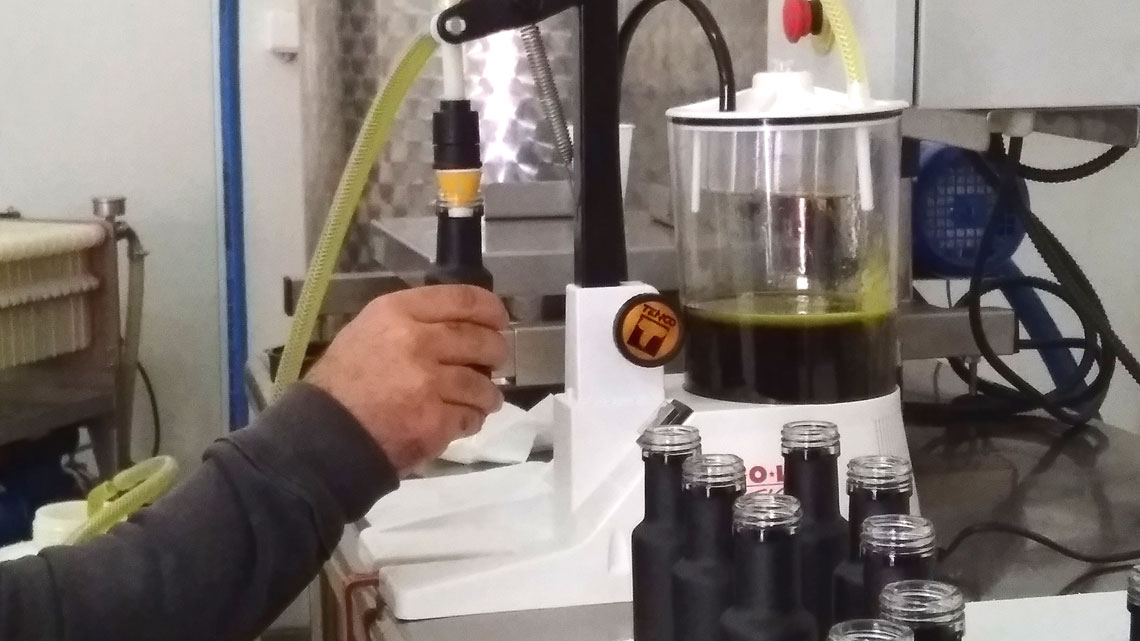
Η τυποποίηση του εξαιρετικού παρθένου ελαιολάδου πραγματοποιείται με τη χρήση αδρανούς αερίου αζώτου (Ν₂). Το άζωτο είναι ένα άοσμο, άχρωμο και μη τοξικό αέριο, το οποίο, χάρη στην αδρανή φύση του, δεν αντιδρά με τα συστατικά του ελαιολάδου. Κατά τη διαδικασία εμφιάλωσης, διοχετεύεται υπό πίεση στον κενό χώρο της φιάλης (headspace), αντικαθιστώντας το οξυγόνο. Με αυτόν τον τρόπο αποτρέπεται η οξείδωση, που αποτελεί τον βασικό παράγοντα αλλοίωσης του ελαιολάδου, και συμβάλλει καθοριστικά στη διατήρηση της φρεσκάδας, της σταθερότητας και όλων των οργανοληπτικών χαρακτηριστικών του προϊόντος.
Πηγές
1. Brenes, M., & García, A. (2019). Oxidation of Olive Oil
and Its Control by Natural Antioxidants. Journal of Agricultural and
Food Chemistry, 67(21), 6046–6053.
2. International Olive Council (IOC). Trade Standard Applying to Olive Oils and Olive-Pomace Oils (COI/T.15/NC No 3/Rev. 13, 2022).
3. World Olive Center for Health. Οδηγός παραγωγής ελαιολάδου υψηλών πολυφαινολών (2019).
4. Aparicio, R., & Harwood, J. (2013). Handbook of Olive Oil: Analysis and Properties. Springer.
5. Gertz,
C. (2014). Chemical and sensory characteristics of oils stored under
nitrogen blanketing. European Journal of Lipid Science and Technology,
116(2), 144–150.